How Childhood Experiences Shape Adult Relationships
How Childhood Experiences Shape Adult Relationships
💡 The Quick Takeaway
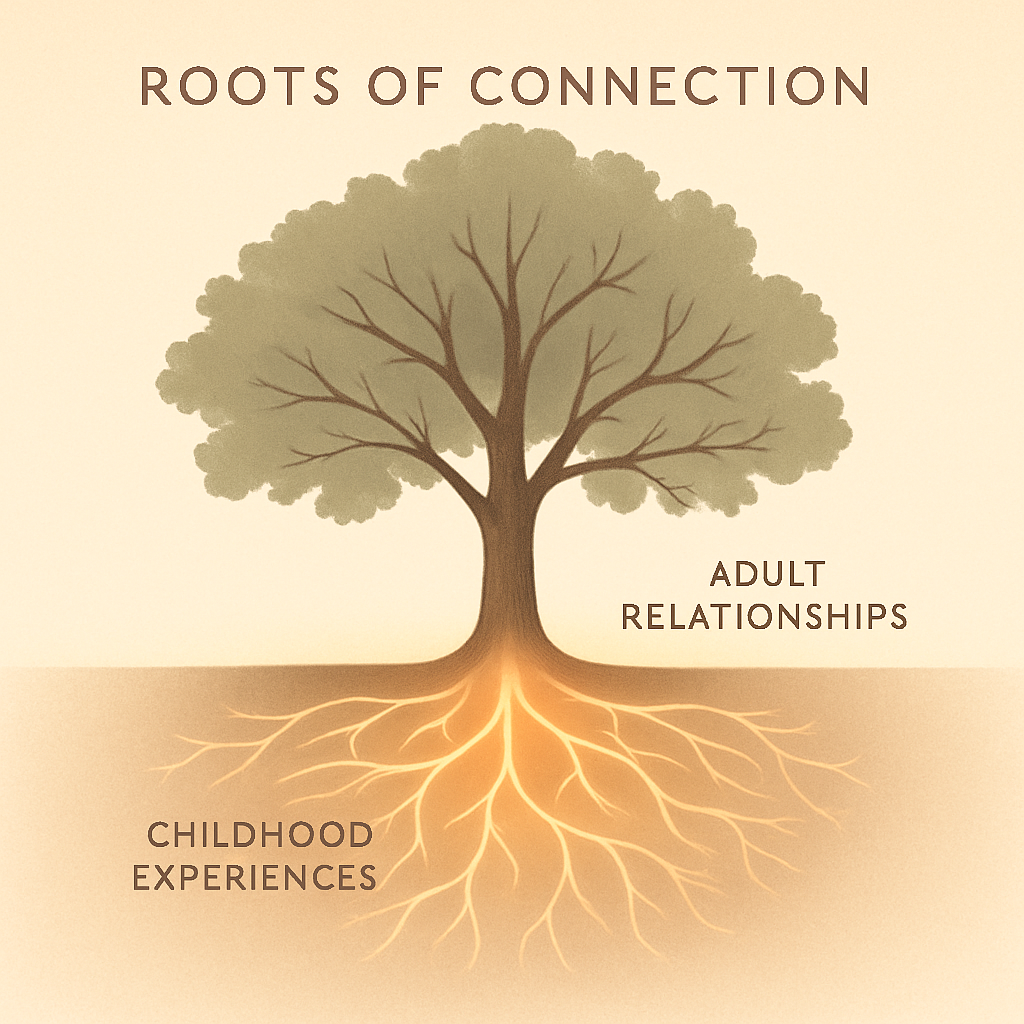
Our childhood experiences act as the blueprint for our adult relationships. What we see, hear, and feel during those formative years creates emotional anchors that steer our interactions today. From joyful memories to frosty silences, these early moments craft the filter through which we view relationships, influencing trust, communication, and emotional availability.
Picture this: You're standing by your office window, gazing at the bustling world outside. Despite the buzz, you're stuck replaying a conversation from yesterday that left you feeling uneasy. You can't quite put your finger on why a seemingly trivial remark about a forgotten lunch box brought up waves of frustration. Ever noticed this happening to you?
This simple scene is more common than you might think. It's a mental thread that, once pulled, unravels a story deeply rooted in your past. Perhaps it wasn't just about the lunch. Maybe it's linked to a childhood memory where forgetting was met with disappointment, making today's remark tug on age-old strings.
Our brains are quirky time-travelers, hopping between past and present, drawing invisible lines connecting yesterday's experiences to today's feelings. Why does it choose those moments? Why do certain situations trigger emotions that seem out of proportion?
Join me on a journey through the labyrinth of childhood memories and the profound impact they have on our adult lives. Together, we'll untangle how these early experiences act as emotional anchors, shaping how we bond, trust, and love.
What This Behavior Means
Invisible Threads
Every emotion we experience in response to a situation often has deeper roots. It's like a gentle tug from an invisible thread that leads back to a childhood memory. These threads can be comforting or they can bind us in loops of misunderstanding and miscommunication.
Habit Loops
Our brains are masters of efficiency, creating habit loops that reinforce certain behaviors. Did you often find yourself tension-filled during family conflicts? Your mind might resort to similar responses during current disagreements, without you even realizing it.
Emotional Reflexes
Notice how some people withdraw at the first hint of disapproval, while others confront it head-on? These reflexes are often born from past experiences that taught us how to protect ourselves, like a personal playbook etched into our subconscious.
The Psychology Behind It
Our childhood experiences shape the architecture of our minds, laying the foundation for adult relationships. This happens through a blend of emotional anchoring and archetype formation during those formative years. The caregivers in our early lives are akin to painters, daubing broad strokes on the canvas of our budding personalities.
First, let's dive deep into emotional anchors. When a child experiences an emotion strongly tied to an event, it often creates a potent emotional anchor. This anchor is like a steadfast lighthouse guiding—or sometimes misguiding—us in comparable situations later in life. For instance, a child who receives soothing reassurance after making a mistake may develop an anchor that makes them seek empathy in challenging situations in adult relationships.
Next, we have emotional archetypes. These are broad personality patterns developed through repeated interactions. A nurtured child, consistently encouraged to share their feelings, might grow into an empathetic adult. On the contrary, a child constantly told to "toughen up" might lean towards stoicism or emotional independence.
So why does our mind cling to these early scripts? It's a survival mechanism. By recalling successful strategies from our past, our brain tries to navigate similar situations efficiently, even when the context has changed.
The Science Made Simple
The world of psychology has unearthed numerous theories that shine a light on this phenomenon. Take, for example, Attachment Theory. It suggests that the type of bond formed between a child and their caregiver shapes the child's expectations in adult relationships. A secure attachment creates trust and stability, whereas insecure attachments may result in anxious or avoidant relational patterns.
Another fascinating concept is regarding Mirror Neurons. These are brain cells that fire both when an individual acts and when they observe the same action performed by another. This means children "mirror" behaviors observed in their environment, which significantly impacts how they express emotions and engage with others.
Relatable Real-Life Examples
"You Always Do This!" - Sarah stares at her partner mid-argument, the words tumbling out before she's even thought them through. Her partner's habit of retreating into silence reminds her of her parents' cold wars, triggering a barrage of accusations.
The Friend Who Never Says "No" - Mark laughs it off when his friends tease him about his inability to decline plans. Inside, he knows it's a habit from childhood, where agreeing was the only way to earn affection.
Meeting the Parents - Lisa's anxiety peaks as she nears her in-laws' home. She feels her heart rate climb over something as simple as a dinner invitation, a cue learned from years of polite, tense family gatherings.
Interesting Facts
- Children are highly perceptive; they begin forming memories from the age of 3.
- About 85% of adult relationships are influenced by early childhood attachment styles.
- Our brain's default state is to reduce ambiguity, which often causes it to revert to childhood behavioral patterns.
- Emotional responses can physiologically mirror our guardians' responses from our formative years due to mirrored learning.
- Secure childhood environments lead to higher resilience and adaptability in adult relationships.
- The brain processes social-emotional situations faster than mathematical problems owing to evolved survival instincts.
The MindCodex Guide to Action
Witness Your Triggers - Pay attention to situations that spike your emotional responses. Understanding when emotions flare up can help you trace them back to their origins.
Journal Your Journey - Keep a log of moments that trigger childhood memories - it helps you map those silent, emotional highways back to your early years.
Build New Patterns - Practice responding to triggers differently. This retrains the brain, forming new, healthier habit loops over time.
Seek Empathy - Engage with a support group or therapist to unpack and externalize childhood experiences. Fresh perspectives aid in reframing unhelpful narratives.
Focus on Communication - Develop open and trusting dialogues in your relationships. It dismantles the fortress of past experiences, allowing authentic connections to flourish.
Conclusion
Recognizing the profound impact of childhood experiences on adult relationships grants us the power to reshape those influences. By navigating our emotional anchors and habit loops with curiosity and compassion, we pave the way for healthier connections. Our past need not dictate our future, but rather, inform it in a way that equips us with empathy, resilience, and self-awareness.
A Small Reflection
Think back to a moment when a small incident seemed unusually overwhelming. How might this moment be a reflection of past experiences? Could recognizing these echoes from our childhood transform how we relate to others today? What stories from your childhood are mirrored in your daily interactions?
About the Author
Hi, I’m Aditya Singh. I’m a counselor and psychotherapist driven by a simple goal: to help people understand the "why" behind their own behavior. I spend my time translating complex psychological research into practical, everyday tools that actually make sense in the real world. My mission with MindCodex is to bridge the gap between clinical insights and our messy, beautiful, everyday lives—making mental health and self-awareness accessible to everyone, one story at a time.
Liked this story? Explore more insights in
View all posts in Deep Clinical Insights →


