Why Do Humans Pace Around While Thinking?
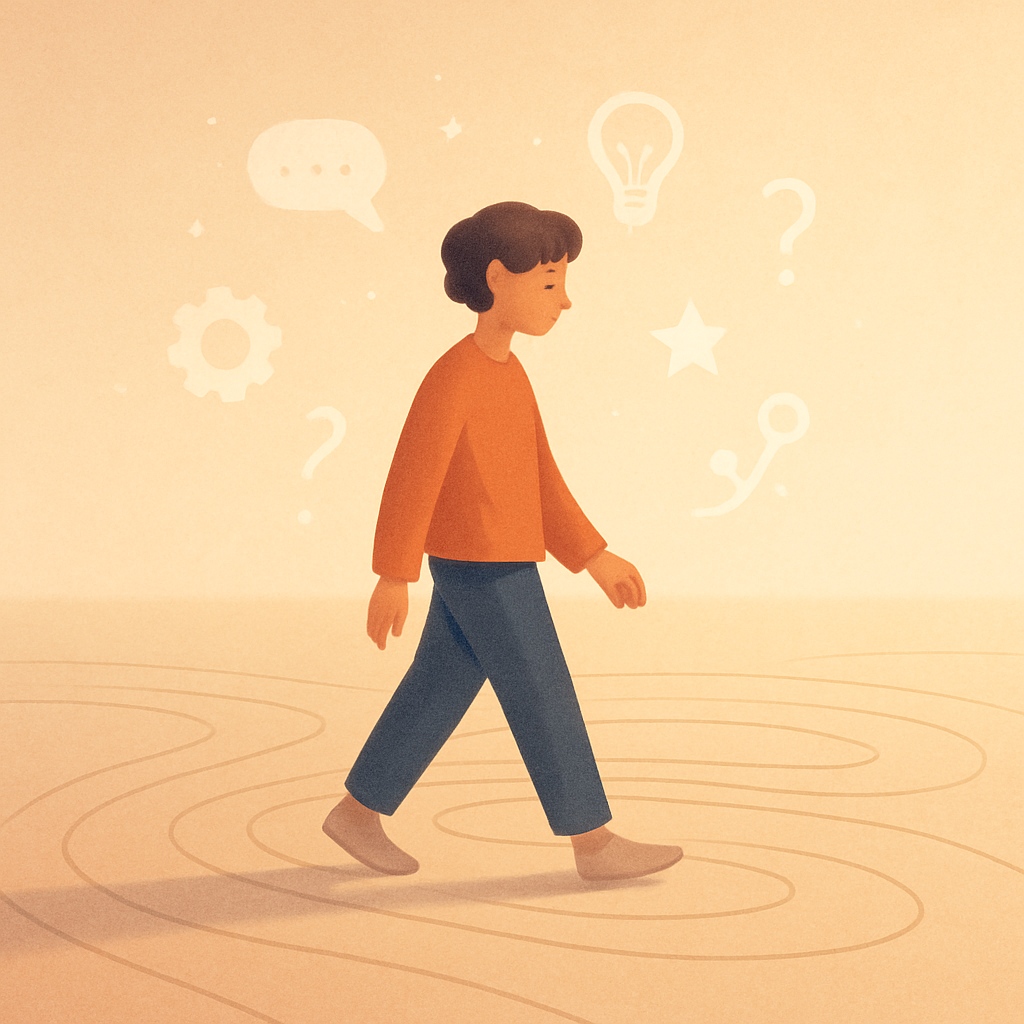
Why Do Humans Pace Around While Thinking?
💡 The Quick Takeaway
Ever caught yourself pacing around your living room while on an important phone call or brainstorming that next big idea? You’re not alone. Pacing is a universal thinking habit that emerges whenever we dive deep into thought. This behavior helps our minds focus, process information efficiently, and even relieve stress—all while activating our body's natural wiring to complete tasks productively.
What This Behavior Means
Enhancing Cognitive Processing
Pacing appears to stimulate our cognitive faculties. While captivating a room with your thoughts, you engage various neural networks in your brain, triggering the release of neurochemicals that enhance concentration and problem-solving. It’s as if the rhythm of your steps syncs with the rhythm of your thoughts.
Inducing a Trance State
Have you ever felt like the world fades away as you pace? This behavior can induce a trance-like state, allowing you to think without external interruptions. The repetitive movements act as a comfort routine, draining stress and ushering you into a heightened state of focus.
Creating Physical Space for Emotional Release
Pacing also provides a physical outlet for emotional energy. When intense emotions such as anxiety or excitement bubble up, moving physically helps dispel pent-up energy, offering emotional relief as your thoughts unwind and align themselves.
The Psychology Behind It
So, why exactly does pacing trigger this mental clarity? Primarily, it’s about the balance between mind and body—a beautifully choreographed dance where movement fuels mental flexibility. In psychology, we often discuss the feedback loop created between physical activity and cognitive function. When you pace, you essentially engage in a physical "distraction" that allows your mind to focus and free up bandwidth for deep thinking.
The act of pacing mirrors the notion of grounding, a therapeutic technique used to calm one's thoughts and emotions. By aligning your physical movements with your mental processes, you create an internal harmony, enhancing your problem-solving capacity. This synchronicity not only calms the mind but also helps organize chaotic thoughts and emotions, fostering a mini cathartic experience in the midst of your living room.
The Science Made Simple
Let's dive into one of the theories: embodied cognition. Simply put, it’s the concept that our thought processes are rooted in sensory and motor experiences. In essence, our brains use bodily actions to help process more complex thoughts. By physically pacing, we ‘embody’ our thoughts, making them easier to handle and manipulate.
Ever heard of the "handedness" effect? It turns out that the side we tend to move more comfortably on can actually influence our mood and decision-making. Translating this to pacing, the act itself leverages bodily cues to modulate our emotional state and cognitive strategies, quite similar to that satisfying feeling of stretching when we wake up!
Relatable Real-Life Examples
Imagine Lisa, wandering her apartment, tangled in decision-making over a job offer. “Left foot, right foot,” she mumbles to herself, each step resolutely leading to a clearer conclusion.
Then there's Tom, pacing the narrow kitchen while simmering stew on a Sunday afternoon. With each wafting aroma, his mind exudes creativity, formulating an innovative recipe he’d been trying to crack for days.
Finally, meet Raj, rehearsing a speech as he roams the length of his living room. “Breathe in confidence, breathe out fear," he chants before every turn, pacing until the message aligns with his internal comfort zone.
Interesting Facts
- Pacing can increase creativity by up to 60% according to certain psychological studies.
- Repetitive motion helps in reducing the “fight or flight” response of stress and anxiety.
- Many historical figures, including Charles Darwin and Steve Jobs, were known for pacing while deep in thought.
- Pacing is found to be a common habit in people with an affinity for kinesthetic learning—those who understand through doing and moving.
- This habit is not only terrestrial; astronauts report pacing habits in zero-gravity environments aboard space stations.
- Pacing can be a powerful form of meditative movement, encouraging mindfulness through physical activity.
The MindCodex Guide to Action
Designate a "Pacing Path": Establish a designated path in your living space or office where you can pace without obstacles. Allowing your body to roam freely can help your thoughts do the same.
Pair Pacing with Problem Solving: Next time you’re grappling with a complex issue, try pacing. Let your feet do the walking while your mind sorts through the solutions.
Emotion through Motion: Use pacing as a tool to manage emotional highs and lows. Allow it to serve as an emotional anchor during stress or excitement, giving your mind the space to stabilize.
Walk to Talk: Whether it’s a presentation or a speech, rehearsing while walking can enhance your memory and delivery, making you naturally more fluid and confident.
Season Your Creativity: Step away from the desk, and take your creative thinking session to your pacing path. The movement can help unlock new ideas and perspectives organically.
Conclusion
At its core, pacing is a beautiful symphony of motion and thought—a rhythm that orchestrates a harmonious blend of cognitive processing and emotional release. It’s one of those intriguing habits that highlights the extraordinary capabilities of our human nature. By becoming mindful of this pacing habit, we not only embrace an age-old mechanism for problem-solving but also cultivate our inner orchestra, enriching the daily symphony of our lives.
A Small Reflection
Think back to a time when you found yourself pacing, almost involuntarily, during a moment of deep thought. Did that help you come to a clearer understanding or decision? Next time it happens, consider: What is your mind trying to process as your feet take you on this silent journey?
About the Author
Hi, I’m Aditya Singh. I’m a counselor and psychotherapist driven by a simple goal: to help people understand the "why" behind their own behavior. I spend my time translating complex psychological research into practical, everyday tools that actually make sense in the real world. My mission with MindCodex is to bridge the gap between clinical insights and our messy, beautiful, everyday lives—making mental health and self-awareness accessible to everyone, one story at a time.
Liked this story? Explore more insights in
View all posts in Behavioral & Everyday Habits →


