Why Do We Snack While Watching TV?
Why Do We Snack While Watching TV?
💡 The Quick Takeaway
Snacking while watching TV is a dance between comfort and distraction—a seemingly innocent habit that spills into our emotional and mental territory. It's a blend of psychological triggers, like conditioned responses and emotional buffering, seamlessly wrapped in the routine of daily life. Understanding the 'why' can lead to more mindful choices that align with well-being.
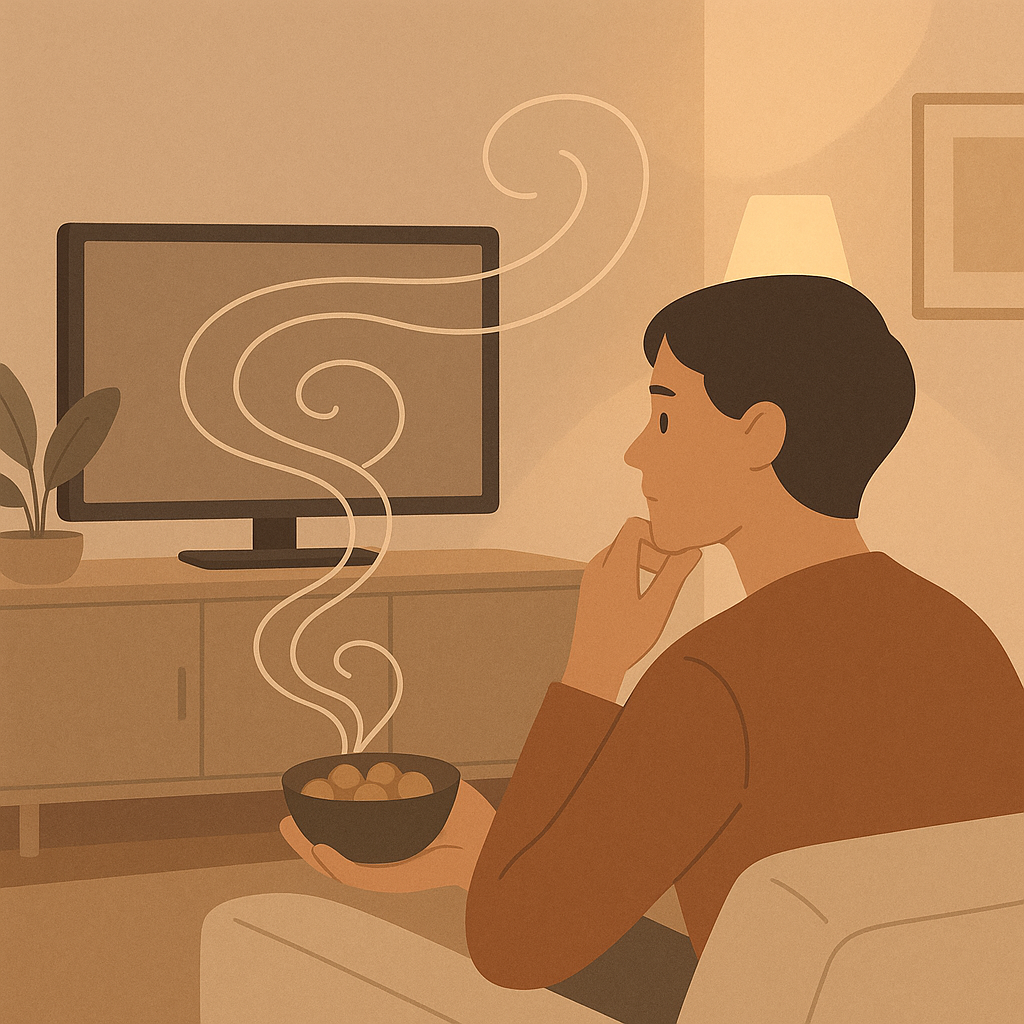
It’s late evening, and you find yourself sinking into the couch after a bustling day. The TV flickers on; maybe it's an episode of your favorite series or perhaps a new movie. Almost automatically, your hand reaches for the bowl of popcorn or a packet of chips resting nearby. It’s as if the act of watching is incomplete without snacking. Ever noticed this happening to you?
This scene might feel familiar. A cozy blanket, the remote snug in one hand, and the satisfying crunch or munch in the other. But have you ever paused to wonder why these two activities pair so well together? Why does our mind associate a flickering screen with reaching for that trusted snack? Let's explore the unseen layers behind this comforting duo.
What This Behavior Means
A Comfort Response
Snacking while watching TV often serves as a comfort response. After a long day, the brain craves both mental relaxation and a sensory reward. Television provides the distraction, while snacks offer a comforting, familiar taste and texture.
A Habit-Loop Culprit
Much like Pavlov's dogs, many of us have conditioned responses tied to our routines. Sitting down to watch TV might automatically trigger snacking if it's something you've done repeatedly. Your brain learns these cues and creates a habit-loop that's hard to break.
Emotional Anchor
Food can act as an emotional anchor. It has the power to soothe feelings or enhance pleasures. Engaging with a beloved TV show while eating can amplify feelings of relaxation or excitement, serving as a temporary retreat from daily pressures.
The Psychology Behind It
Peeling back the layers on why we snack while glued to our screens reveals emotional lessons, deep-seated habits, and even social learnings. Simply, it's a mixture of sensory reward, habits, and emotional needs that our mind uses to navigate stress.
For starters, snacking can fulfill an emotional need—what psychologists might call a kind of "self-soothing." When we dive into a series, especially one filled with familiar characters and plots, it gives our minds a chance to escape. Pairing this with snacks heightens that comfort and provides an immediate sense of relaxation and reward.
There are also learned behavioral responses at play. Our brains love routines; once established, they're hard to break. Turn on a screen, reach for a snack. This predictable action sequence becomes a habit that fulfills both distraction and contentment needs.
Moreover, when we snack, our mind temporarily satisfies itself—releasing dopamine, the “feel-good” neurotransmitter. This action offers a sense of accomplishment and a little spike of joy that can make us feel better after an emotionally draining day.
The Science Made Simple
Let’s simplify a couple of psychological theories that apply here: classical conditioning and emotional buffering. Classical conditioning, popularized by Pavlov, explains why salivating at a snack while sitting in front of a screen feels so automatic. It's a learned response: you've connected snacking with relaxation over time.
Emotional buffering deals with how snacks act as a cushion against stress. In stressful moments or when seeking comfort, we often gravitate towards habits that provide instant emotional soothing. Eating while enjoying TV acts as that buffer, offering temporary relief and satisfaction.
Relatable Real-Life Examples
Imagine Sarah, sinking into her couch after a hectic day of Zoom calls. She flips on her favorite sitcom and instinctually reaches for the open bag of cheese puffs. "Comedy and crunch, my perfect duo," she chuckles to herself, nibbling away with glee.
Or take Dave, who loves a good action film over the weekend. With the TV on blast, the popcorn makes its way into his hand as naturally as breathing. "Explosions just aren't the same without my popcorn," he tells his spouse, with a playful eye-roll.
And then there's Lucy, binge-watching a drama series late into the night, accompanied by her loyal companion—chocolate ice cream. As tears roll during a particularly gripping scene, she mumbles, "Thanks for always being there, chocolate therapy."
Interesting Facts
- The average person spends nearly 3 hours a day watching TV while eating.
- Dopamine levels can spike by up to 50% when eating snacks that are high in sugar or fat.
- 70% of people form snack habits based on their environment, with televisions being a primary instigator.
- Multitasking with food and screens can dull mindfulness and lead to overeating.
- Emotional eating can temporarily alleviate stress, but it's generally associated with negative long-term health impacts.
- Conditioned responses tied to emotional states can start forming in childhood.
The MindCodex Guide to Action
Create a Snack-Free ZoneTry committing to eating only at the dining table. This simple change breaks the habitual link between TV and snacks.
Practice Mindful EatingWhen you have a craving, pause for a moment. Ask yourself, "Am I really hungry?" Tune in to your body's signals to check your hunger levels.
Swap for Healthier OptionsIf you must snack, opt for healthy options like carrot sticks or almonds. They still satisfy the need to munch without compromising your health.
Engage in Hand Occupied ActivitiesChoose activities that involve your hands while watching TV, like knitting or squeezing a stress ball. This limits snacking opportunities.
Plan Your Viewing TimeStructure your TV time with purpose and decide which shows you'll watch beforehand. This limits binge-watching marathons that often lead to mindless snacking.
Conclusion
Understanding why we snack while watching TV offers a window into how our emotional and environmental cues shape daily habits. By exploring the psychology behind this behavior, we gain the tools to make intentional, healthier choices. Enjoying a TV show doesn't have to automatically lead to snacking; with awareness and small shifts, we can enjoy entertainment while nurturing our well-being.
A Small Reflection
Recall the last time you settled in for your favorite TV show with a snack. Did it bring relaxation or an unnoticed autopilot routine? Awareness of such small habits can ripple into broader life changes. Could redefining these routines lead to more mindful living?
About the Author
Hi, I’m Aditya Singh. I’m a counselor and psychotherapist driven by a simple goal: to help people understand the "why" behind their own behavior. I spend my time translating complex psychological research into practical, everyday tools that actually make sense in the real world. My mission with MindCodex is to bridge the gap between clinical insights and our messy, beautiful, everyday lives—making mental health and self-awareness accessible to everyone, one story at a time.
Liked this story? Explore more insights in
View all posts in Behavioral & Everyday Habits →


