Why Emotional Neglect Is Hard to Recognize
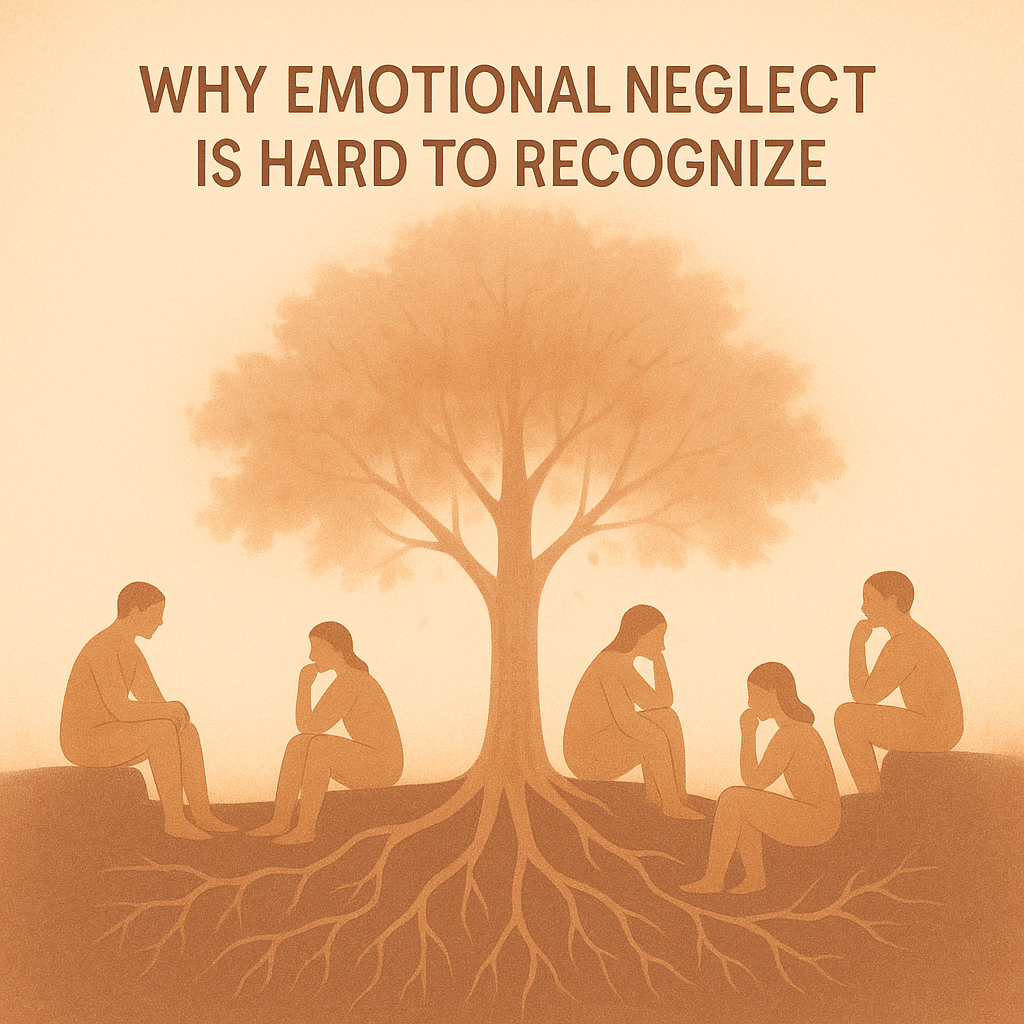
Why Emotional Neglect Is Hard to Recognize
💡 The Quick Takeaway
Emotional neglect isn't about what happens, but rather what doesn’t happen. It's the silent, often unseen lack of emotional response that many of us might not even be aware of. This quiet absence can leave imprints that subtly influence the way we feel, think, and interact with others. Recognizing it means acknowledging feelings you might have been taught to ignore.You've had a long day. You finally collapse onto your couch, your mind unraveling the day’s events. Suddenly, you recall that flicker of disappointment when you shared good news with a friend, and they barely reacted. Ever noticed an emptiness that echoes louder than any words spoken? Emotional neglect is often like this – invisible, yet profoundly impactful. How many of us walk through life sensing something missing but can’t quite put our finger on it?
Such moments aren't rare. They tiptoe into everyday conversations, sometimes with those closest to us. Maybe you grew accustomed to hearing "You're so strong" instead of "It's okay to cry." Or perhaps you've called a loved one, seeking comfort, only to leave the conversation feeling emptier than before. Why does our mind overlook this void? It’s partly because emotional neglect isn't a tangible act but rather a non-action – a silent absence that our mind struggles to see.
Let's delve into this curious phenomenon and see why emotional neglect is difficult to pinpoint, yet so crucial to acknowledge. After all, understanding this invisible thread may unravel parts of ourselves we've left unattended, opening pathways to healing and growth. We’ll walk through why this happens and how you can start recognizing these invisible imprints in your life.
What This Behavior Means
Where's the Reaction?
In social interactions, we often look for reactions to validate our feelings. If someone doesn’t mirror our emotions or show empathy, we might feel confused or dismissed. Emotional neglect feels like knocking on a door that never opens, leaving us wondering what's wrong with us for feeling this way.
The Invisible Void
Have you ever felt an inexplicable emptiness despite being surrounded by people? Emotional neglect creates a void that’s hard to identify because there’s often nothing directly hurtful or traumatic to point to. You’re left questioning if your feelings of loneliness are valid, as there's no obvious wrong to name.
The Habit-Loop of Minimization
Over time, repeated experiences of emotional neglect teach your brain a trick – minimize your needs and dismiss your feelings. You develop a habit-loop of believing that your emotional needs aren’t worthy of attention. This learned behavior becomes ingrained, making it hard to see that the emotional support you lacked was significant.
The Psychology Behind It
The roots of emotional neglect often trace back to our early interactions with caregivers and the emotional environment we grew up in. An emotionally neglectful environment might be mistaken for a healthy one because there’s no overtly negative behavior. It's marked by an absence of responses, which can lead a child (and later, an adult) to internalize the belief that their emotions or needs are unimportant.
Human minds crave connection and validation; when these emotional supports are absent, especially during development, it can create an underlying sense of not being enough. Emotional archetypes play a part here. For instance, an individual growing up in such an environment might step into the "Strong One" or "Independent One" archetype, believing they need no one and thus continue the cycle of neglecting their emotional needs.
This perpetuation can happen in relationships where individuals seek partners or friends similar to those initial caregivers, subconsciously repeating the pattern to try and "fix" the past. But without awareness, the cycle loops, unnoticed. Recognizing emotional neglect starts with identifying these patterns and realizing that the support you didn't receive was vital.
The Science Made Simple
Attachment Theory provides a lens through which we can understand emotional neglect. This theory suggests that our early experiences with caregivers shape our attachment style and influence how we relate to others throughout life. If caregivers are unresponsive or absent emotionally, you might develop an avoidant attachment style, leading you to suppress your own emotions in adult relationships.
Another helpful concept is the idea of "emotional attunement" – the ability to be in sync with another person’s emotional state. In environments lacking this attunement, a person may struggle with identifying their own emotions. Without the foundational understanding of what emotional support looks like, recognizing emotional neglect becomes a challenge.
Relatable Real-Life Examples
Scene 1: During a busy workday, Sarah calls her mother to share her job promotion news. "That's nice. How's your cat?" her mother responds, shifting the focus. Sarah hangs up, feeling silly for wanting to celebrate.
Scene 2: At a party, Mark finds himself on the balcony, trying to shake off a familiar loneliness. A friend asks, "Where's your better half?" Mark chuckles, muttering, "Somewhere out there," knowing they wouldn't understand how alone he feels even when his partner's around.
Scene 3: Lisa finds herself at a family dinner. Every time she attempts to discuss her newfound love of painting, the conversation quickly diverts to her brother's achievements. She smiles politely, chewing down the pang of invisibility.
Interesting Facts
- Emotional neglect is often more about what's absent than what’s present, making it less visibly traumatic than other kinds of emotional harm.
- Many individuals who face emotional neglect don’t recognize it as a problem until well into adulthood.
- Emotional neglect can impact one’s self-esteem and personal relationships, often being mistakenly labeled as just shyness or introversion.
- Statistics reveal that emotional neglect is more common than outright physical or verbal abuse in many homes.
- Professionals believe that postpartum depression can, in part, evolve from emotional neglect experienced as a child.
- Recognizing emotional neglect involves emotional undoing—years of unlearning that one's feelings don’t matter.
The MindCodex Guide to Action
Embrace Your EmotionsBegin by acknowledging and accepting your feelings, no matter how trivial they seem. Practicing self-validation helps break the habit-loop of minimization.
Reach OutIdentify safe individuals in your life who can provide the emotional support you lacked. Open up to trusted friends or seek counseling if possible.
Reflect and JournalKeep a journal to track emotional reactions and explore moments of feeling unseen. Over time, patterns emerge that you can work on changing.
Set BoundariesEstablish boundaries with those who continually downplay your emotions. Protect your mental health by gently asserting your needs for emotional exchanges.
Seek Professional HelpConsider therapy to uncover deep-seated patterns of emotional neglect. A professional can guide you in forming healthier relationships.
Conclusion
Recognizing emotional neglect is akin to finding colors in the gray. It lurks in the quiet space of unmet needs and unspoken words. As you peel back the layers of oversight, you're granted the grace of recognizing that your emotions do matter. Take heart, knowingly stepping towards connections that fulfill, embracing vulnerability as strength, and understanding the vastness of true human connection.A Small Reflection
Think back to a moment when you felt unheard or unseen. Does the subtle presence of this affect your reactions today? What changes when we start to see emotional neglect as a missing piece rather than an invisible one? How would your life change if you started giving your emotions the acknowledgment they deserve?
About the Author
Hi, I’m Aditya Singh. I’m a counselor and psychotherapist driven by a simple goal: to help people understand the "why" behind their own behavior. I spend my time translating complex psychological research into practical, everyday tools that actually make sense in the real world. My mission with MindCodex is to bridge the gap between clinical insights and our messy, beautiful, everyday lives—making mental health and self-awareness accessible to everyone, one story at a time.
Liked this story? Explore more insights in
View all posts in Deep Clinical Insights →


